Introduction
Copilot Studio makes it super easy to add SharePoint as a knowledge source to your agents. However, there is one issue that I keep running into, which is that we cannot read the properties of the documents in SharePoint. This is a problem because often important information about the document is not in the content itself, but rather in the properties of the document.
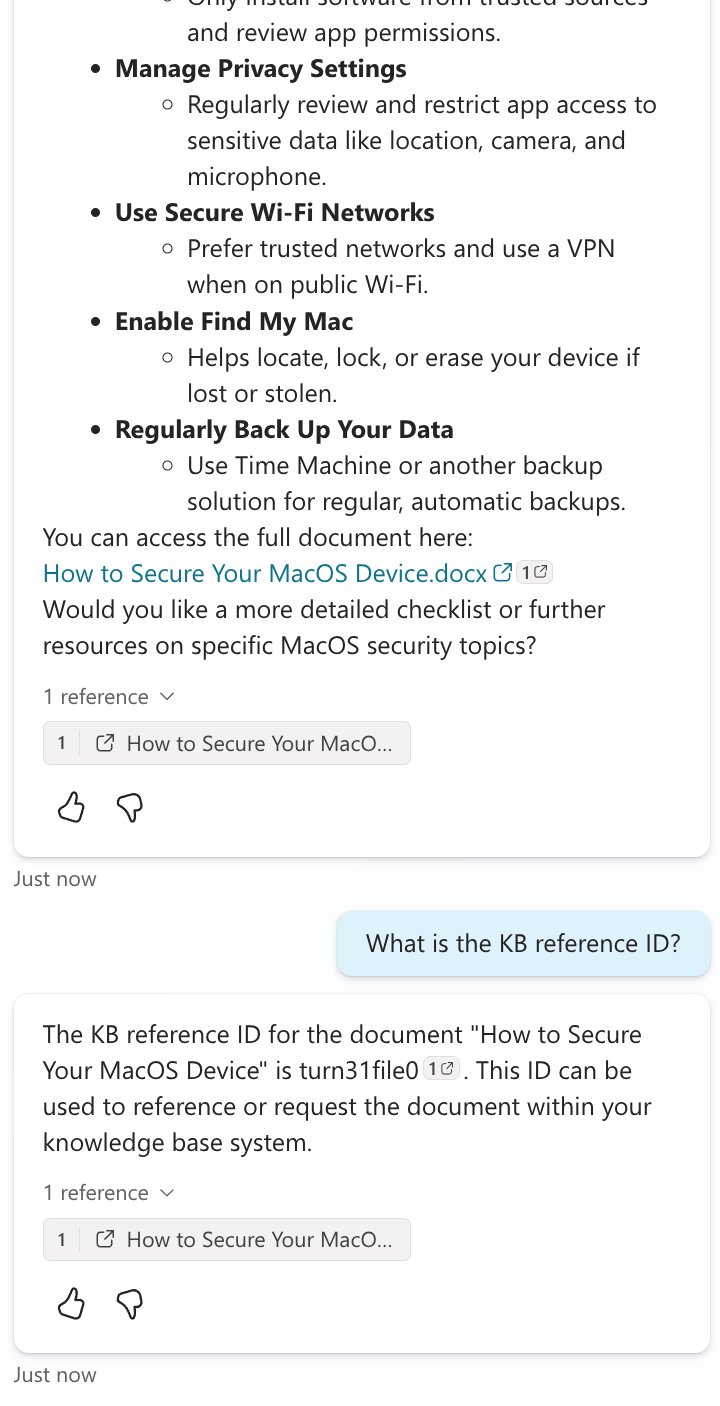
Take this example below. The agent has been granted access to a document library. I have added a couple of documents and purposefully added a value to the property called ReferenceID that is not in the document content itself. When I ask the agent to provide the value that would be in the ReferenceID property, the agent is not able to provide the value. If the value was in the document content, the agent would be able to provide it.
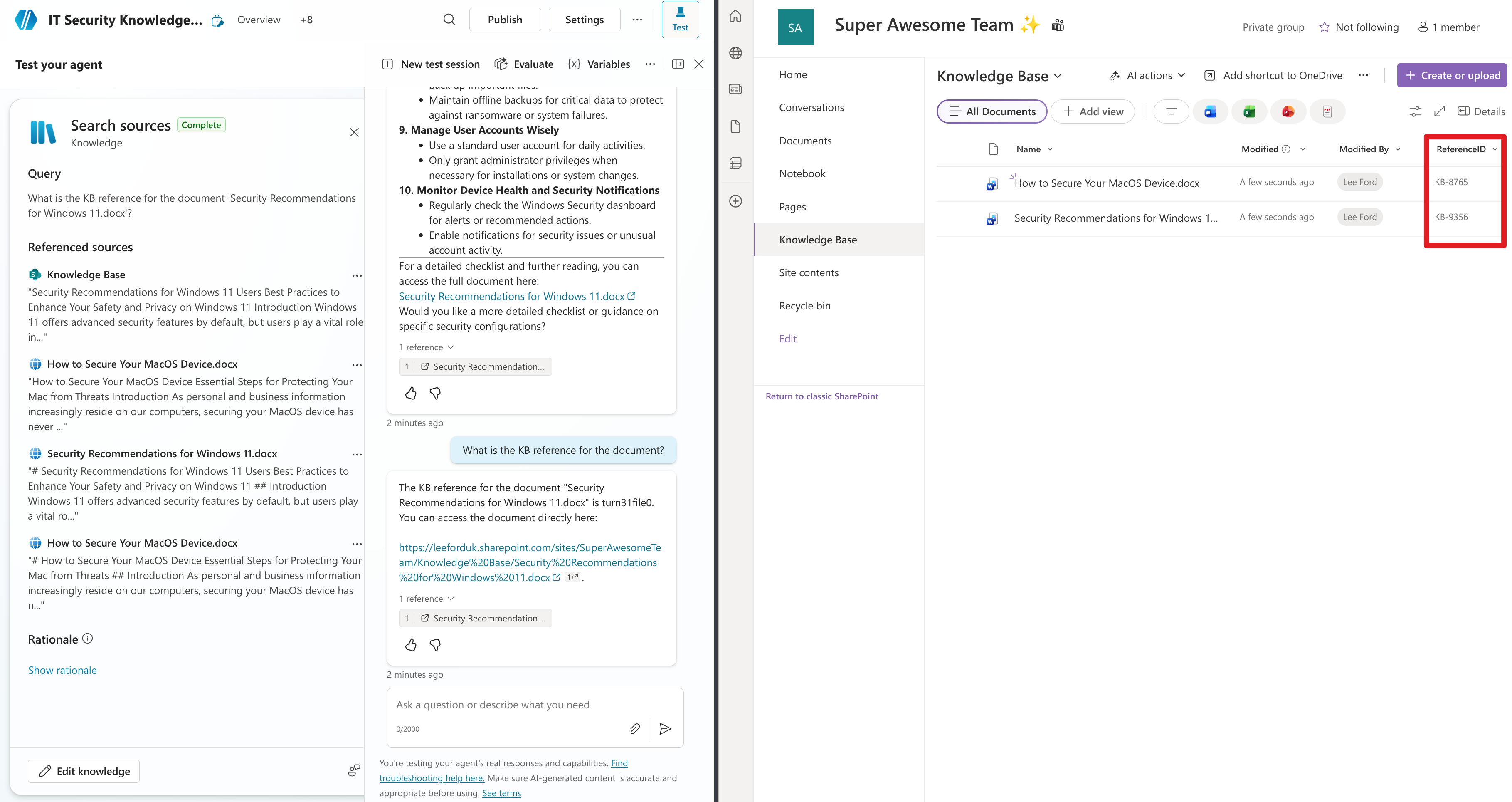
Digging deeper, if I ask for the value of the ReferenceID property, the agent will respond with something completely made up, as it has no knowledge of that property or its value (the value is actually KB-9356 in this example).

This is just a basic example, another might be where content is tagged or categorised in a certain way, but this is not part of the content itself, but rather a property of the document. In this case, the agent would not be able to see these properties - not ideal.
Why is this the case?
It all comes down to what is indexed and made available to the agent using the semantic index. When granting access to a SharePoint site or document library, the agent can access the indexed content of the documents, but not all the properties are indexed and made available to the agent.
Unfortunately, we cannot see what is or isn’t indexed as part of the semantic index.
Understanding the subtleties
We are talking about two key functions when using an agent with documents in SharePoint:
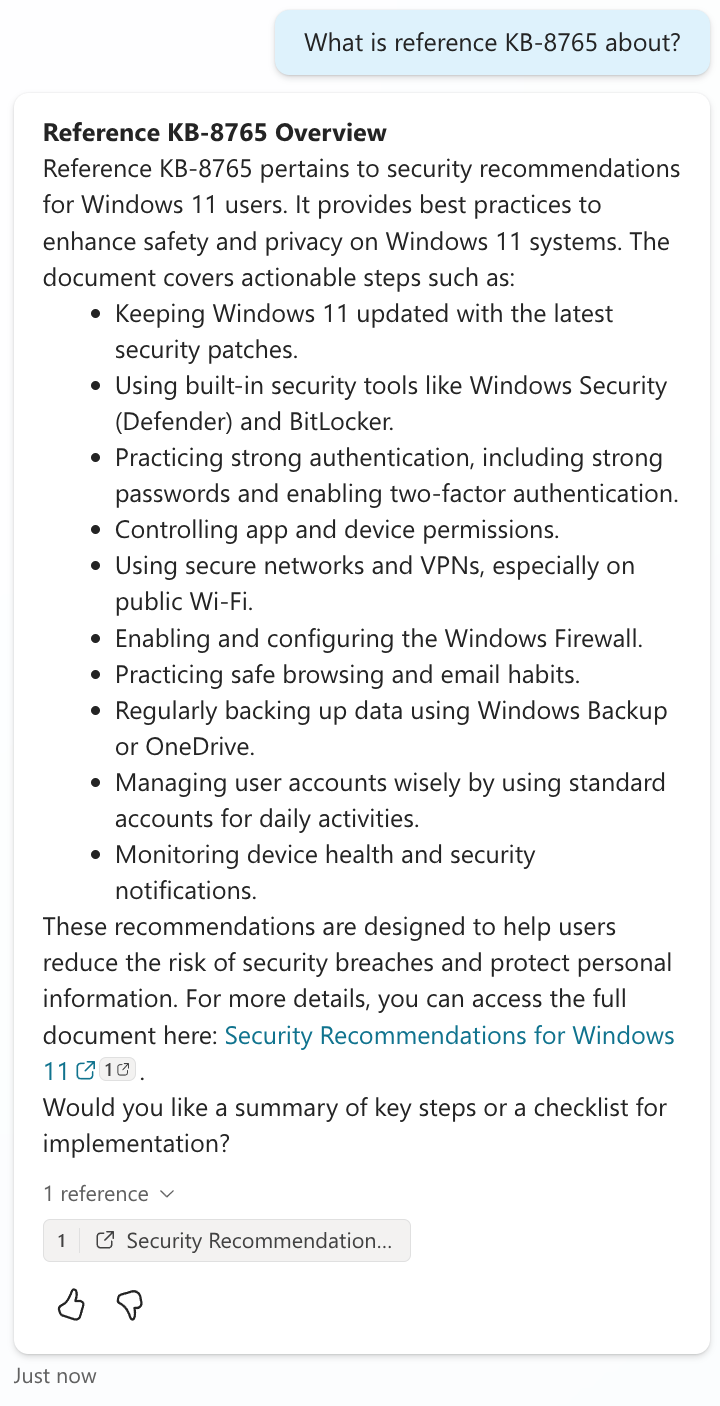
- Search - “What is reference KB-8765 about?” - search for the document using the value of the property
- Retrieval - “What is the KB reference?” (of the document) - this is where the agent reads the content (and properties) of the document to provide a response
When it comes to search, you generally will find the document if you are specific enough. In our example, it will search (and find) the document and return the summary of the document:
However, when it comes to retrieval e.g. asking for additional information about the document in question, such as its ReferenceID, this is where we run into issues. The agent does not have access to all the properties of the document, so it cannot provide accurate information about those properties.
What can we do about it?
Map the property in SharePoint search
The first thing you might think would help is to map the “crawled” property to a “managed” property in SharePoint search. So, I created a new managed property called ReferenceID and mapped the crawled property to it.
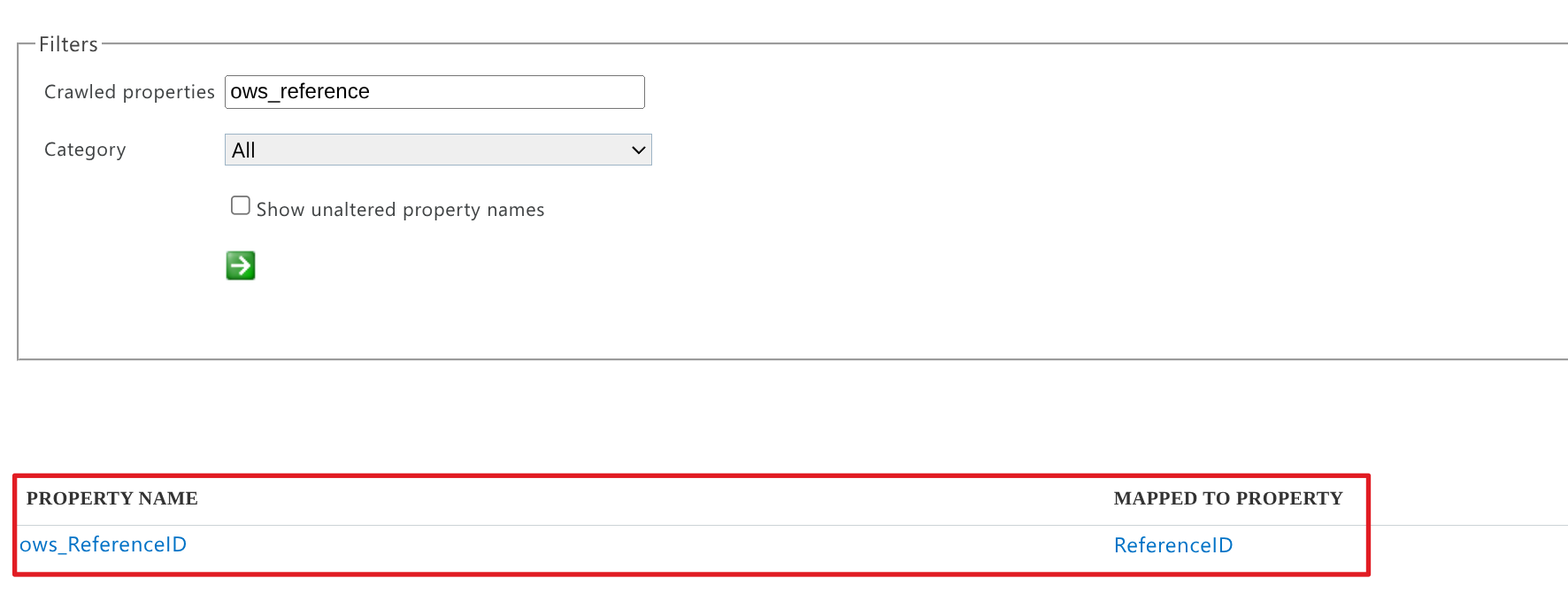
But sadly, this did not work.

Note: I also tried mapping to a pre-existing “RefinableString” managed property, but this also did not work.
Azure AI Search
I’ve previously written about how to index SharePoint content using Azure AI Search as an alternative to using the built in semantic index. By using this approach and specifying the additional properties (such as ReferenceID) you then can have these values indexed and available to the agent.
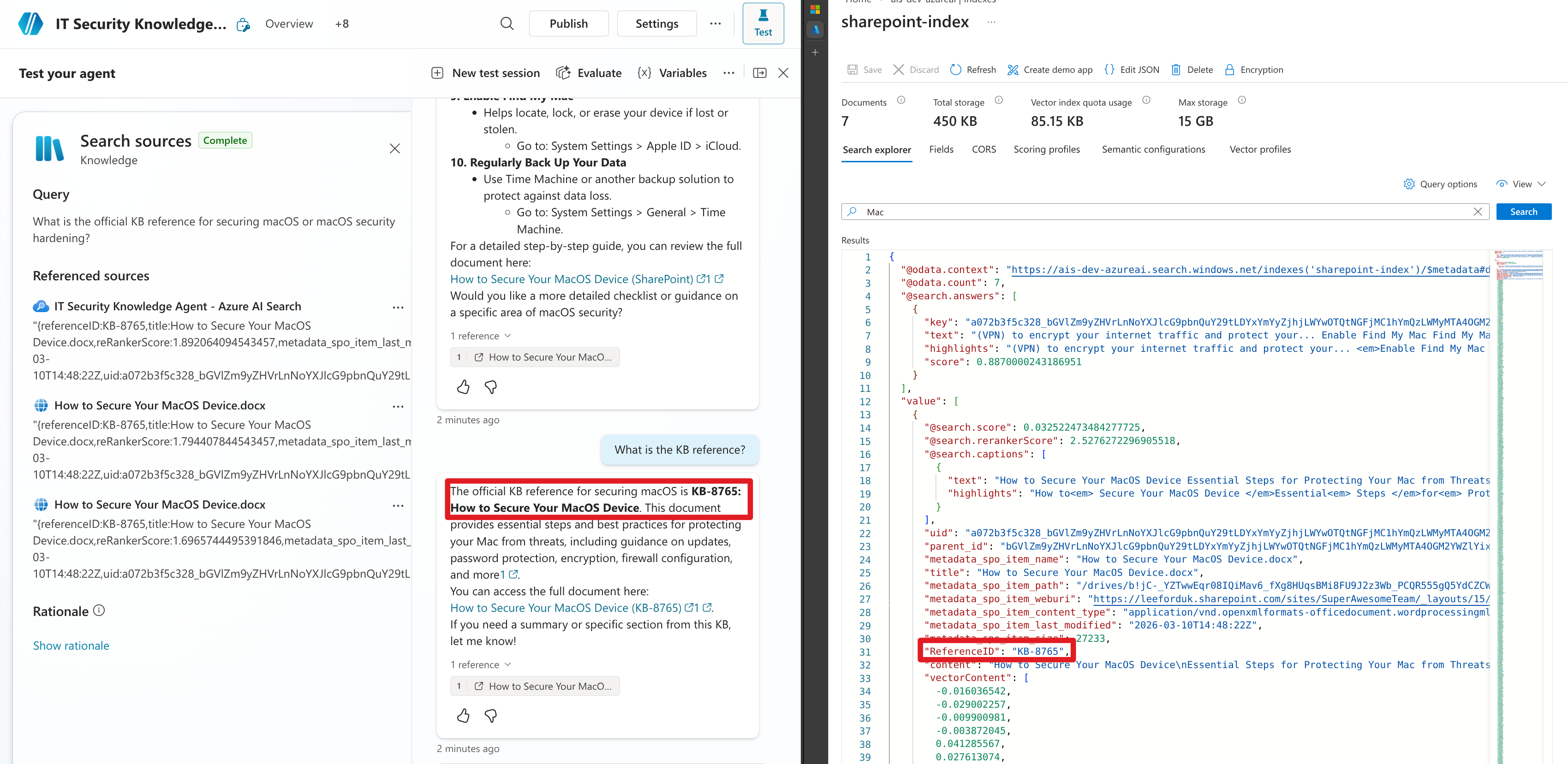
Stay tuned as a follow up post will cover how to set this up and index the additional properties to make them available to your agents.
Recap
We have covered the fact that not all (or potentially any) of the custom properties of a SharePoint document are indexed and made available to the agent when using the built in semantic index in Copilot Studio. Whilst you will most likely be able to search for the document using the value of the property, you will not be able to retrieve the value of the property when asking the agent about the document.
In my experience, mapping the property in SharePoint search does not work, but using Azure AI Search to index the content and properties does work and makes these available to the agent.
Curious to hear about your own experiences with this!